SOME COMMON MYTHS ABOUT TABASCO® BRAND PEPPER SAUCE
We have learned that there are a few common myths about our brand’s history that have been repeated so often over the years that many consider them to be fact. So McIlhenny Company has decided to share with die-hard Tabasco fans and American history buffs alike – answers to a number of frequently asked questions regarding the long, and often fabled history of Tabasco brand pepper sauce.
Shane Bernard, Ph.D.
Historian & Curator
McIlhenny Company
Avery Island, LA 70513
History@TABASCO.com
FREQUENTLY ASKED QUESTIONS
Did a man named Maunsel White produce a pepper sauce prior to Edmund McIlhenny's introduction of TABASCO® brand Pepper Sauce?
Yes. However, it is untrue that Maunsel White's sauce was advertised for sale as early as 1853, as some have claimed. In fact, White's sauce was first advertised for sale, based on current information, in 1864 as "Maunsel White's Concentrated Essence of Tobasco Pepper" - only four years before Edmund McIlhenny put his Tabasco brand pepper sauce on the market.
Does this mean that Maunsel White coined the TABASCO® trademark?
No. Maunsel White died in 1863, a year before his heirs first marketed his sauce; and when they did so, as mentioned above, they used the name "Maunsel White's Concentrated Essence of Tobasco Pepper." This product was subsequently referred to and known by the consuming public as "Maunsel White's." Therefore, because White's product was identified by the public using the shorthand designation "Maunsel White's," it is doubtful that the White family had any proprietary rights in the word "Tobasco."
In addition, the best information presently available indicates that Maunsel White's product ceased to be manufactured commercially during the 1870s. Thus, even if White's heirs claimed rights to "Tobasco," their failure to use the word beginning in the 1870s would have resulted in what is legally referred to as trademark abandonment.
Does history record that Edmund McIlhenny obtained his peppers or pepper sauce recipe from Maunsel White?
No. In fact, there is no contemporary historical evidence that Edmund McIlhenny knew Maunsel White, much less that he received his peppers or pepper sauce recipe from Maunsel White. Furthermore, we know that White's and McIlhenny's recipes were different: White's recipe, descriptions of which appeared in print on at least two occasions, called for boiling his concoction; whereas McIlhenny never boiled his product, but allowed it to ferment naturally.
Might Maunsel White's and Edmund McIlhenny's peppers been of the same variety?
Although it's possible that White's and McIlhenny's peppers were the same variety, it's also equally possible that their peppers were different varieties of red pepper that merely bore similar names (or different spellings of the same name). It is known, for example, that the words "tobasco/tabasco" were used as geographically descriptive terms in the antebellum period to refer to peppers thought to hail from the Tabasco region of Mexico, and that the words did not necessarily refer to one variety.
Moreover, during the early 1800s a spice was exported in large quantities from Mexico and was referred to geographically as "tabasco," even though the spice in question was obtained from the berry of the myrtle tree (indigenous to the Tabasco region of Mexico), and not made from capsicum peppers at all. (This spice is now known in the market as "allspice.") Thus, the geographic terms "tobasco/tabasco" were used quite loosely during the antebellum period. Later, in 1888, Edmund McIlhenny's pepper was officially recognized by a noted American botanist and is now classified as Capsicum frutescens var. tabasco.
Does McIlhenny Company have exclusive rights to the trademark "TABASCO®" if "Tabasco" is the name of geographic and political regions in Mexico?
Yes. Federal statutes provide and federal courts have held that a geographically descriptive word can be protected as a trademark when that word has acquired a secondary meaning.
"Tabasco" acquired a secondary meaning as a trademark as a result of the public's association of "Tabasco" with a single manufacturer, McIlhenny Company. Since the early 20th Century, federal courts have held, and more recently affirmed, that McIlhenny Company is the exclusive owner of the Tabasco mark. In addition, courts have enjoined the infringing use by others attempting to trade on the goodwill of McIlhenny Company as symbolized by its Tabasco mark.
Did Edmund McIlhenny first bottle TABASCO® Sauce in discarded cologne bottles?
 |
 |
| |
|
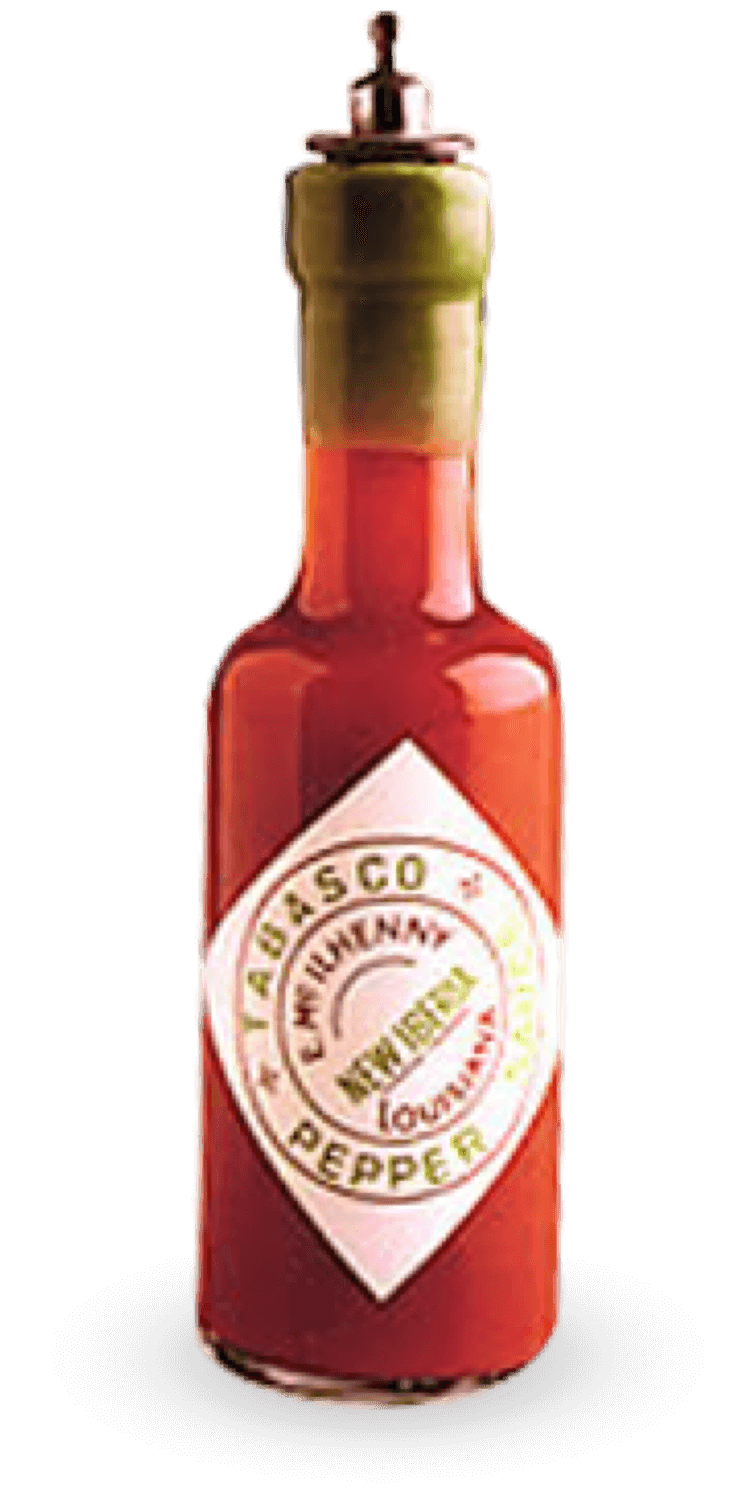
| The only known unopened bottle of TABASCO® brand Pepper Sauce from McIlhenny Company's early history. |
|
| |
|
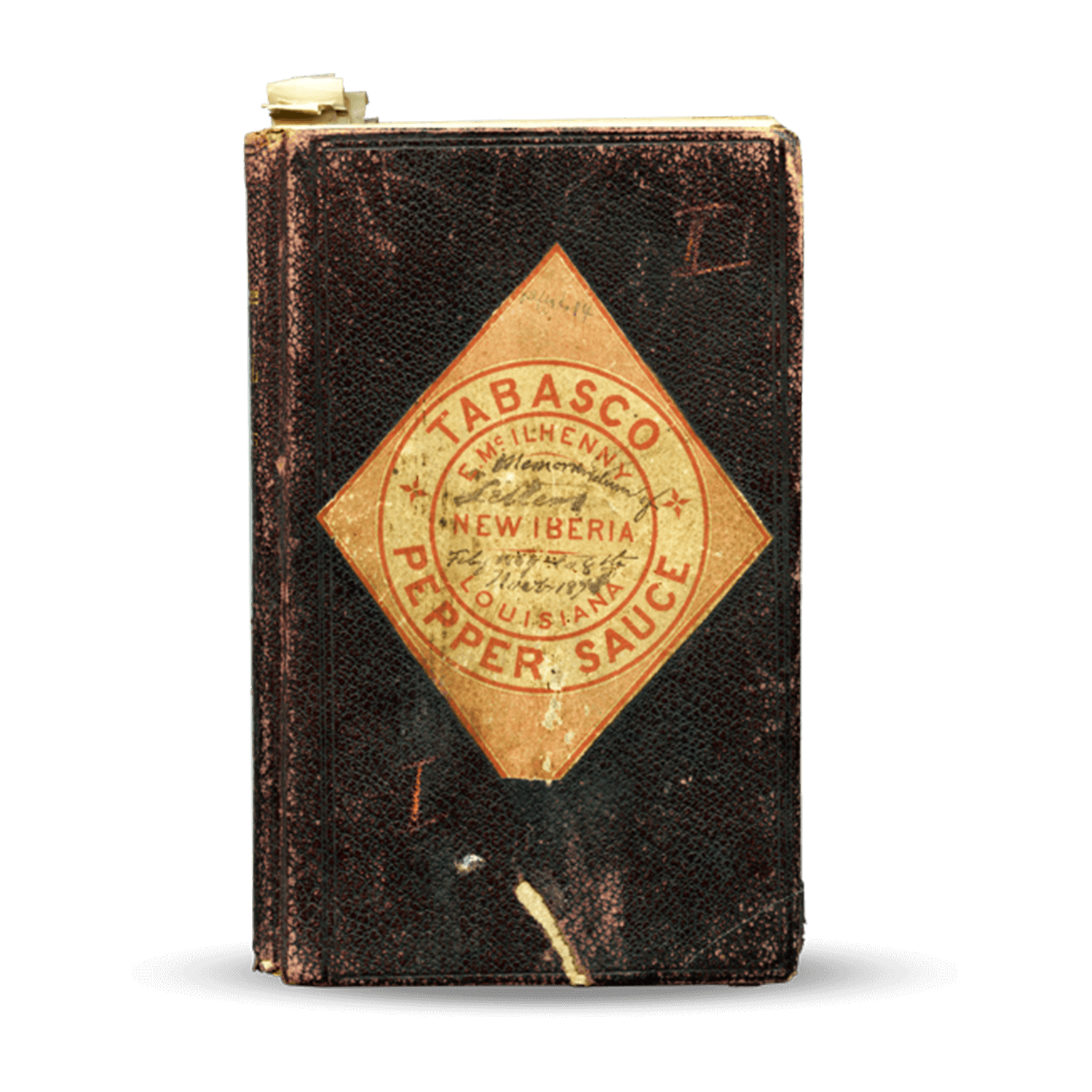
According to McIlhenny family lore, Edmund McIlhenny used discarded cologne bottles to distribute his sauce to family and friends prior to marketing it commercially. When in 1868 he decided to sell Tabasco sauce to the general public, he ordered thousands of new "cologne bottles" (as Edmund McIlhenny himself referred to them in business correspondence) from a New Orleans glassworks. It was in these new cologne bottles that Edmund McIlhenny first commercially distributed Tabasco sauce.
Is it true that archaeologists found the oldest known bottle of TABASCO® Sauce while excavating the site of an Old West saloon in Nevada?
No. Although an empty bottle of Tabasco sauce dating from the 19th century was indeed excavated on the site of an Old West saloon, it is not the oldest known bottle of Tabasco sauce. Earlier bottles have been unearthed on Avery Island, Louisiana, at the site of the original factory that produced Tabasco sauce. The Nevada bottle is nonetheless an early bottle of Tabasco sauce that reveals much about who was using the product and where they used it during the product's infancy.
Is it true that TABASCO® Sauce was so instantly popular in Europe that Edmund McIlhenny opened a London office in 1872 - only four years after Tabasco sauce originated - in order to handle intense European demand for his product?
 |
 |
| |
|
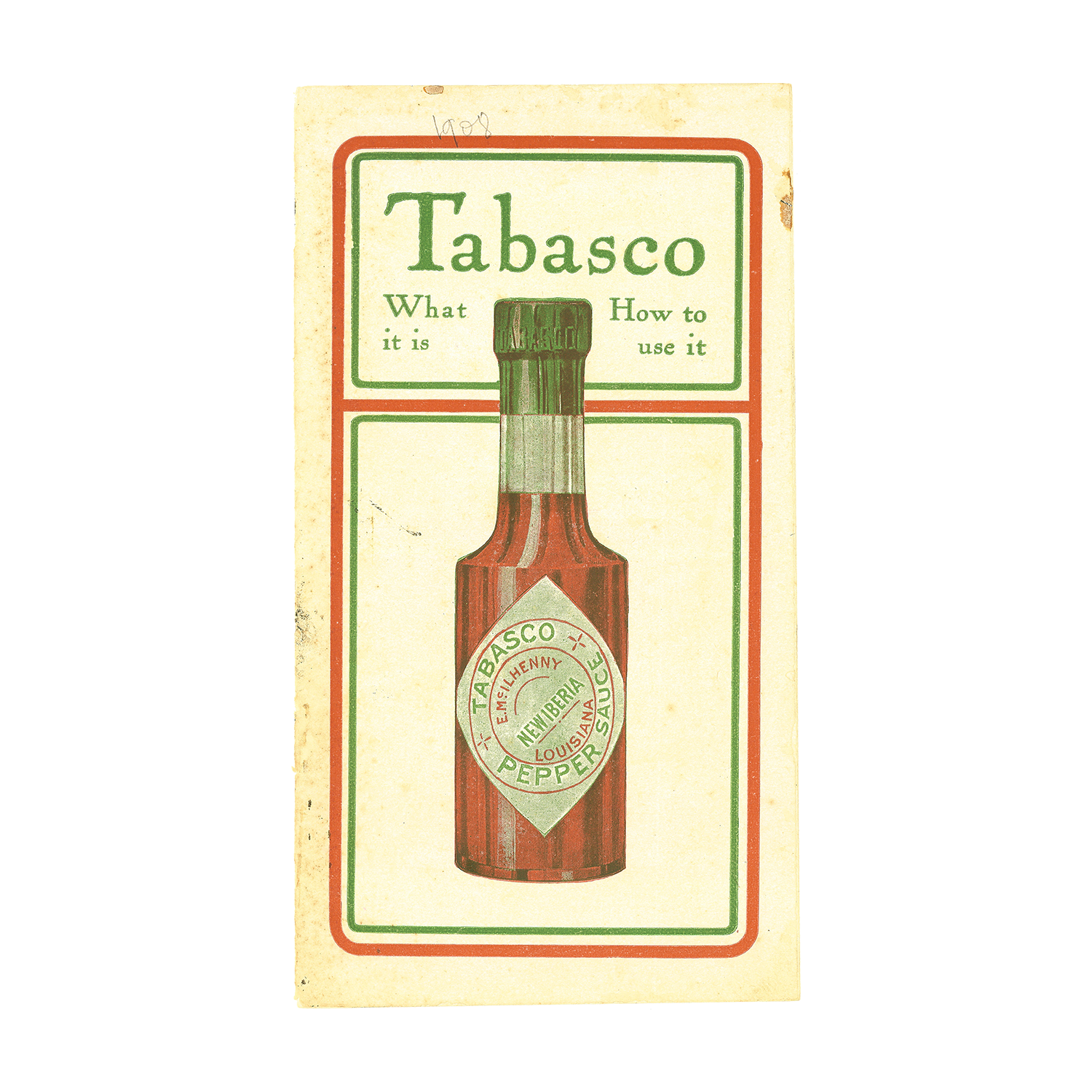
| A colorful circa 1905 advertisement for Tabasco sauce. |
|
| |
|
No, this oft-repeated story is entirely untrue. Edmund McIlhenny did not export any TABASCO® sauce to Europe until late 1873/early 1874, when he sent only a few dozen bottles to Europe in order to stir interest in the product. He did not begin to export Tabasco pepper sauce to Europe in large quantities until several years later.
Is it true that a certain General Hazard, a federal administrator in Louisiana during Reconstruction, helped to introduce TABASCO® Sauce to consumers nationally by giving a bottle to his brother, food distributor E. C. Hazard of New York City, who liked the product so much that he sold it on a large scale for Edmund McIlhenny?
This story, which has been passed on orally for generations, is partly accurate, but data has been found recently that helps to clarify the matter. For example, although General Hazard did exist, he retired from military service before moving to Louisiana; and he was a distant cousin, not a brother, of food distributor E. C. Hazard of New York. Regardless, because several elements of the story are factual, it seems likely that General Hazard did have an actual role in introducing Tabasco sauce to E. C. Hazard, who did indeed distribute Tabasco sauce on a widespread basis for Edmund McIlhenny. On the other hand, two persons besides General Hazard are known to have recommended TABASCO® sauce to E. C. Hazard - one of whom actually succeeded in convincing E. C. Hazard to distribute the product.
Ultimately, the extent of General Hazard's role in introducing TABASCO® sauce to E. C. Hazard is unclear. It would be unrealistic, however, to dismiss as mere coincidence the several correlations between oral tradition and historical fact.
When was the TABASCO® trademark first registered?
 |
 |
| |
|
| Former McIlhenny Company president J. A. McIlhenny around 1900. |
|
| |
|
It was not until 1905 that Congress passed an act providing for federal registration of trademarks used in commerce between states. This act provided that marks in exclusive lawful use for the ten years proceeding the enactment of the statute were entitled to registration. From at least as early as 1880 until the late 1890s, the mark "Tabasco" was in exclusive use by McIlhenny Company to identify its pepper sauce. Consequently, as a result of the public's association of "Tabasco" with McIlhenny Company as the single source of the product during this period, under the doctrine of secondary meaning, the "Tabasco" trademark was exclusively owned by McIlhenny Company. Thus, uses by third parties in the late 1890's and early 1900's were infringing and unlawful uses.
In fact, John Avery McIlhenny, a former president of McIlhenny Company, signed an affidavit, on the advice of his trademark counsel, stating that - within the meaning of the Trademark Act of 1905 - McIlhenny Company was indeed the exclusive lawful user of the Tabasco trademark and entitled to registration of the mark under the 1905 Act. A 1920 decision of the U.S. District Court for the Western District of Louisiana confirmed the accuracy of John Avery McIlhenny's affidavit.
Was former McIlhenny Company president E. A. McIlhenny (1872-1949) the first person to bring the South American nutria rat to Louisiana, or to North America in general?
 |
 |
| |
|
| Former McIlhenny Company president E. A. McIlhenny around 1930. |
|
| |
|
No. E. A. McIlhenny was at least the third nutria farmer in Louisiana; at least the second nutria farmer in the state to set loose the animals intentionally (another Louisiana farmer setting loose an unknown number of nutria in 1937, several months before McIlhenny even obtained his first nutria); and he never imported them from abroad, as often claimed, but, rather, obtained his first nutria from a pre-existing nutria farm below New Orleans. Regardless, he did have a role in the animal's proliferation, operating a nutria farm on Avery Island, Louisiana, from 1938 until his death in 1949 - a business operation that had no ties to his position as president of McIlhenny Company. During that period E. A. McIlhenny intentionally set loose a large number of nutria into the south Louisiana wild. (It is untrue that his nutria were first set loose accidentally during a hurricane.) He also sold breeding stock to nutria farmers throughout North America. It is interesting to note that as early as 1930 the State of Louisiana began to encourage nutria farming among its citizens, and that in the mid-1940s the State publicly announced its intention to release nutria into a state-managed wildlife area near the mouth of the Mississippi River.
Have more questions about McIlhenny Company or TABASCO® brand products? Read our FAQs for more information.
Back to FAQ
|